Leather Types Explained: What You're Actually Buying
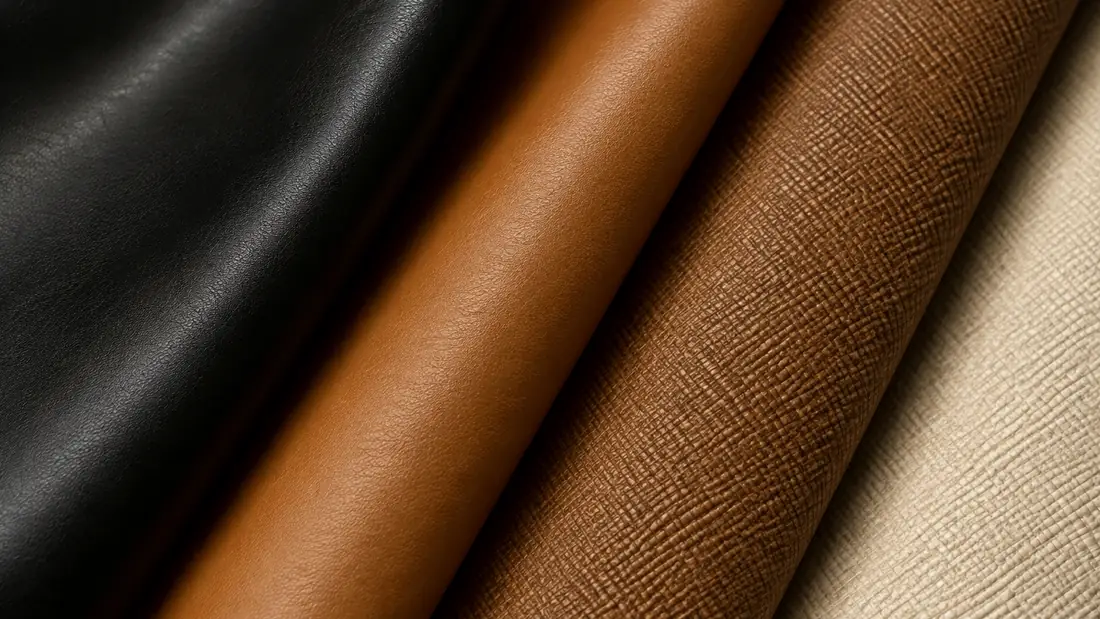
Here is the industry's best-kept non-secret: 'genuine leather' is a legal term, not a quality grade. It can describe premium full-grain hides - or bonded leather, which is leather scraps and fibers glued together and stamped with a grain pattern. Bonded leather peels within a few years. Understanding four or five leather names turns confusing labels into clear choices.
Full-grain leather is the hide's outermost layer, complete with natural grain: the strongest, most breathable cut, and the only one that develops a deep patina. Top-grain is sanded slightly to remove imperfections - a touch less character, a touch more uniformity, still decades of life. Both are what quality bags are made of. If a listing just says 'leather' at a price that seems too good, it is usually neither.
Lambskin is the buttery, fine-grained leather behind most luxury flap bags - incredibly soft, noticeably delicate. It scratches more easily and wants gentler care, which is the trade for a handfeel nothing synthetic matches. Nappa is a similar soft, dyed leather, usually slightly more durable. Both are 'dress leather': carry them with the same care you would a silk blouse.
Saffiano leather is treated with a distinctive cross-hatch press that makes it scratch-resistant, water-repellent and structure-holding - the reason work totes love it. Pebbled (or tumbled) leather hides scratches in its texture entirely, making it the best choice for daily-use bags that will live on desks and in cars. Neither needs pampering; both age gracefully.
The right question is not 'which leather is best' but 'best for what.' A daily commute tote wants Saffiano or pebbled leather. A special-occasion shoulder bag earns its keep in lambskin. A travel duffle wants full-grain that shrugs off airport handling. Buy the leather for the life the bag will live, and even modestly priced bags outlast expectations.
In person, quality leather announces itself: a rich, earthy smell (never chemical or plastic), a grain that looks irregular under the light, edges that are finished rather than raw, and a handfeel that warms quickly. Online, read the material line carefully - 'full-grain cowhide' tells you everything; 'vegan leather' means polyurethane, which is a fair choice but a different care story entirely.
Buy the leather for the life the bag will live - and it will outlast the trend that sold it.
Leather type decides care. Lambskin wants conditioner twice a year and a lifetime away from keys and rough surfaces. Saffiano shrugs off rain and needs only a damp-cloth wipe. Pebbled leather forgives everything and asks for an occasional brushing. Full-grain wants the full routine - clean, condition, protect - and repays it with the deepest patina in the leather world. Match the routine to the hide and every type lasts decades.
Marketing names multiply faster than leather types do. 'Vachetta' is vegetable-tanned full-grain cowhide (the pale tan that darkens beautifully). 'Pebbled' and 'tumbled' describe the same texture treatment. 'Calfskin' simply says the hide came from a calf - finer grain, softer hand. 'Saffiano' is a finish, not a hide - usually applied to calf leather. When a listing uses an unfamiliar word, the question that matters is always the same: full-grain, top-grain, or bonded?
Polyurethane 'vegan leather' has real advantages: lower cost, rain-proof, no animal products, and consistent color. Its trade-offs are equally real: it does not develop patina, it peels within years rather than decades, and it does not breathe. For a trend piece or a rain-or-dash commuter bag, it is a reasonable choice. For the bag you carry every day for a decade, quality animal leather remains the better value per year carried.
Every Buylium listing names its leather honestly - browse the collection and choose with confidence.
Online leather shopping is a photo-reading skill. Full-grain shows irregular, organic texture - small scars and variation are quality's fingerprints, not flaws. Saffiano's cross-hatch is uniform by design and photographs flat. Bonded leather often looks suspiciously perfect: even grain, plastic sheen, no pore detail. Zoom into the product photos; if the texture repeats like wallpaper or reflects light like vinyl, the price should reflect what is actually on offer.
Ready to get to work? Shop the collection - free US shipping, tax free.