Why Investing in Quality Bags Beats Buying Cheap
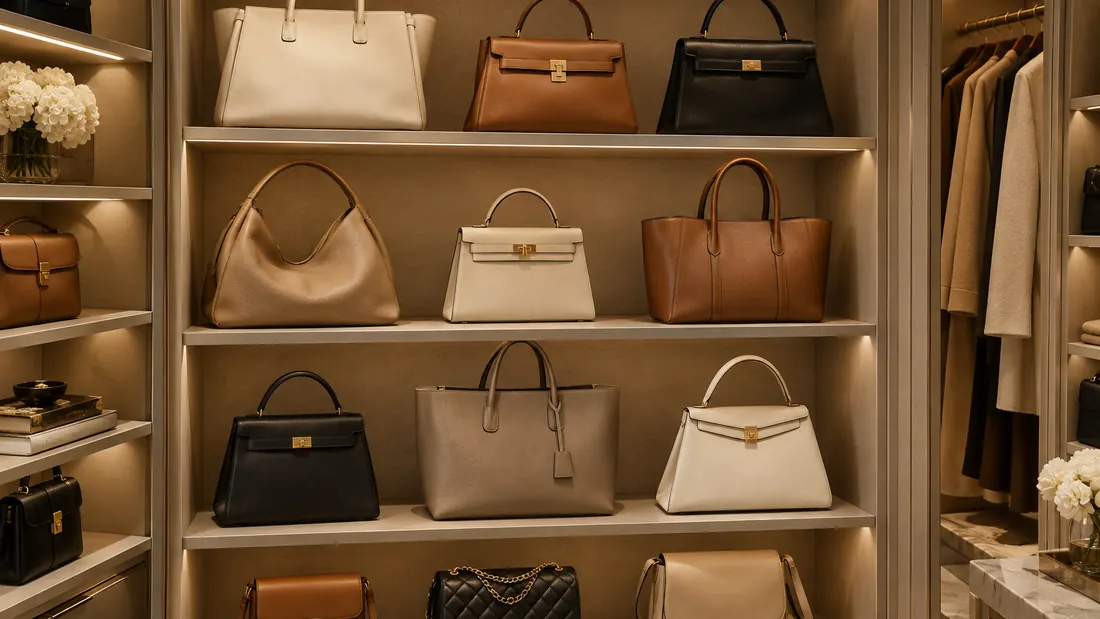
The price tag is the least informative number on a bag. Divide price by realistic years of use and the picture inverts: a $40 bonded-leather bag that peels in eighteen months costs $27 a year and ends in a landfill. A $300 full-grain leather bag used five years costs $60 a year - and unlike the cheap one, it resells. Quality is not the expensive option; disposability is.
Three things predict a bag's lifespan, and none of them are the logo:
Turn a candidate bag over and look at the base and lining. Makers who care about the invisible parts care about the visible ones too.
Synthetic materials age by failing - peeling, cracking, fading in ways no one finds charming. Quality leather ages by recording: a soft sheen where your hand rests, edges that darken, a shape that molds to your habits. This patina is why vintage leather bags look better than their modern fast-fashion equivalents, and why a ten-year-old quality bag often photographs better than a two-year-old cheap one.
A closet of five quality bags simplifies mornings; a shelf of twenty mediocre ones complicates them. Fewer bags means each one is known - what fits, what it pairs with, where it goes. The 'buy less, choose well' philosophy is not minimalism for its own sake; it is decision fatigue removed from your mornings and a wardrobe where everything earns its shelf space.
Quality leather bags hold meaningful resale value - often 30 to 60 percent of purchase price for well-kept pieces, and more for styles that appreciate. Fast-fashion bags resell for nothing because everyone knows how they age. Buying quality is therefore partially refundable in a way cheap fashion never is. Keep the dust bag and the receipt; future you will thank present you.
If you are upgrading a collection in stages, start with the bag you carry most days. The everyday workhorse - usually a shoulder bag or tote - accumulates cost-per-wear fastest and shows quality's advantages soonest. Add occasion pieces later, and let the cheap bags rotate out naturally as the quality ones take over.
The bitter taste of poor quality lingers long after the sweetness of a low price is forgotten.
Product listings reward careful readers. 'Full-grain leather' is a fact; 'genuine leather' is a category; 'vegan leather' means polyurethane. Check the lining fabric (cotton twill and suede-like microfiber age well; thin polyester snags), the base (feet protect the bottom from every surface), and whether hardware is described as solid brass or steel versus unspecified 'metal.' Photos of the interior tell you as much as the exterior - makers who finish the inside finished the outside.
Quality bags want conditioner twice a year, occasional hardware tightening, and eventual professional re-stitching - call it the cost of two coffees a year. Cheap bags want replacing. The comparison that matters is total cost of ownership: purchase price plus care plus replacement frequency, divided by years carried. Run that math on any two bags you own and the quality argument makes itself.
Honesty requires the exceptions: a bag for a single event, a trend you want to test before committing, a beach bag that will live in sand and sunscreen - these are legitimate cheap-bag purchases. The mistake is not buying inexpensive bags; it is expecting them to behave like quality ones. Match expectations to construction, and there is no disappointment on either shelf.
Explore Buylium's leather bags - quality construction, honest pricing, free US shipping.
Quality sellers stand behind construction; that backing is part of what the price buys. Before purchasing, check what the warranty covers - stitching and hardware defects versus general wear - and whether the seller offers repairs or parts. A company that sells replacement feet, strap hardware or zipper pulls is planning for your bag's second decade. That service infrastructure is invisible on day one and invaluable in year five.
Ready to get to work? Shop the collection - free US shipping, tax free.