How to Care for Leather Bags: The Complete Guide
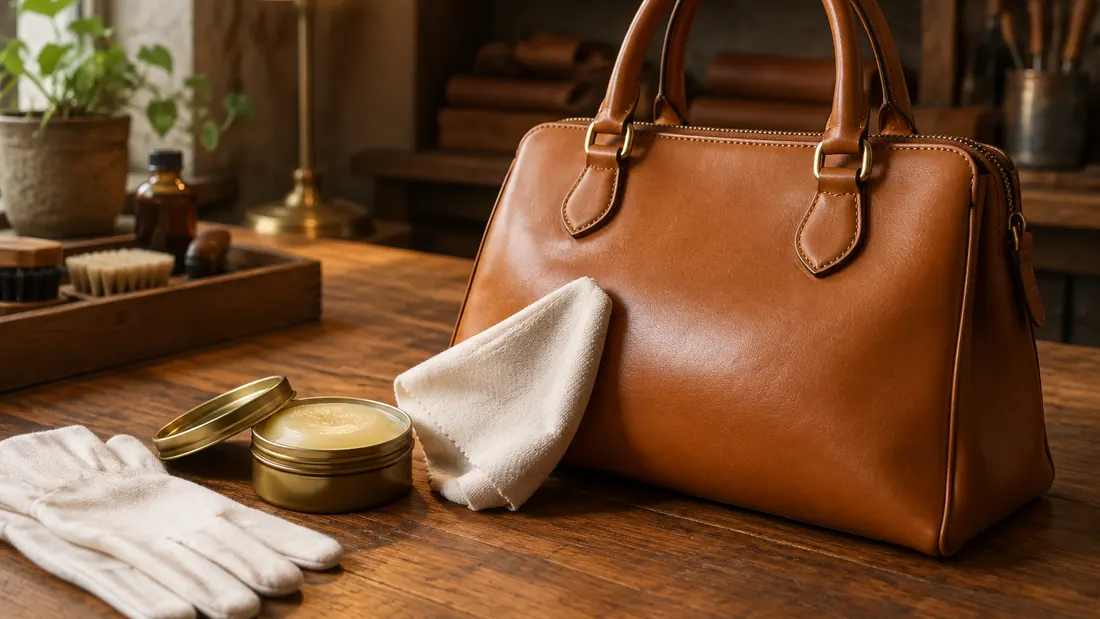
Leather is skin that has been preserved - and like skin, it dries, stains and ages depending on how you treat it. The payoff for five minutes of monthly attention is a bag that looks better in year ten than it did in month one: the softness deepens, the patina richens, and the structure stays true. Neglected leather does the opposite - it cracks, fades and stiffens long before its time.
Once a week or so, empty the bag and wipe it with a soft, barely damp cloth. This removes the invisible film of dust, skin oils and hand cream that slowly dulls the finish. For grained leathers (Saffiano, pebbled calf), a soft brush lifts grime from the texture. For smooth lambskin and nappa, cloth only - their delicate finish shows every scratch.
Leather conditioner replaces the oils that evaporate over time. Apply a pea-sized amount with a soft cloth, work in circles, and let it absorb overnight. Twice a year is enough for bags in regular use; over-conditioning clogs the pores of the leather and darkens it permanently. Test any conditioner on the base or inside flap first - a ten-second check that protects a decade of use.
The rule for every spill is the same: blot, never rub. Ink is the exception that needs professional help - home remedies usually spread it deeper. Water stains should be left to dry naturally at room temperature, then brushed; heat from a hairdryer sets them permanently. Oil stains get a dusting of cornstarch left overnight to draw the grease out.
Most leather bags are ruined in the closet, not on the street. Stuff each bag with acid-free tissue or a cotton pillowcase to hold its shape, keep it in its dust bag (never plastic, which traps moisture and fades color), and store upright away from direct sun. Add a silica packet in humid climates. Chains and straps tucked inside prevent handle imprinting on the leather below.
A quality leather protector spray - tested on a hidden spot first - adds meaningful resistance to rain and stains. Apply two light coats in fall and refresh in spring. If a bag does get soaked, stuff it, shape it, and let it dry slowly away from heat; the leather will recover if you resist the hairdryer.
Leather does not stay beautiful in spite of being used - it stays beautiful because it is used well and cared for simply.
Care sticks when it is small and scheduled. Once a month: empty the bag completely (crumbs and receipts left inside press patterns into the lining), wipe the exterior with a damp cloth, wipe the handles twice - they collect the most oil - and let everything air dry overnight before reloading. Once a season, check the hardware: tighten loose screws on clasps with a tiny jeweler's screwdriver before they wobble loose in a coat pocket.
Leather is a natural material that benefits from rest. Wearing the same bag every day compresses its structure and loads the handles with oil faster than it can recover. Two or three bags in rotation - even alternating across a week - lets each one relax back into shape and doubles the life of the whole collection. If you carry one bag daily, give it at least one full day off a week.
Loose stitching, worn strap holes and tired hardware are all routine repairs - any leather repair shop (or a good cobbler) re-stitches seams and replaces zippers for a fraction of replacement cost. Retire a bag when the leather itself fails: cracked through the grain, lining shredded beyond re-lining, or structure gone. A quality bag usually needs its first repair around year five and its second around year twelve - both cheaper than any new bag of equal quality.
Every Buylium bag ships with a dust bag and care card - explore the collection and choose your next classic.
Thrifted or inherited leather responds to patience better than to enthusiasm. Start with a thorough clean, then condition lightly three times over three weeks rather than once heavily - the leather absorbs gradually and darkens evenly. Stiff structure softens with gentle use; stuffing the bag and flexing the leather by hand speeds it up. Most bags that look past saving are simply dehydrated, and leather is one of the few materials that forgives neglect given time.
Ready to get to work? Shop the collection - free US shipping, tax free.